Winter roof leaks are sneaky. Unlike a summer storm that dumps rain and immediately shows you where water’s getting in, winter leaks develop slowly. Snow sits on your roof for days or weeks. It melts. It refreezes. It melts again. Water finds microscopic pathways through shingles, under flashing, into tiny cracks you’d never see from the ground. By the time you notice a problem inside your house, the leak has often been happening for a while—and the damage is way worse than that little stain on your ceiling suggests.
The good news? Winter leaks give warning signs before they become catastrophes. You just need to know what you’re looking for. Most Reno homeowners miss these early signals because they’re subtle or appear in places you don’t check regularly. Let’s change that. Here are five warning signs that your roof is leaking or about to leak this winter—and what to do about each one before it costs you serious money.
Warning Sign #1: Water Stains on Ceilings or Walls
This is the obvious one, but it’s worth starting here because people often misinterpret what they’re seeing. A water stain doesn’t mean “small problem.” It means water has penetrated your roof, soaked through insulation, saturated wood, and finally made it through drywall to become visible. You’re seeing the tip of an iceberg. The actual damage is much more extensive than what’s showing.
Winter water stains often appear after temperature fluctuations—warm days that melt snow, cold nights that freeze moisture in place, repeat. The stain might be yellowish-brown, and it often has a slightly fuzzy or rippled texture. If the stain is active (still damp), that’s an emergency. Even if it’s dry, it means water got in at some point and will get in again. Don’t wait to see if it grows. Check your attic immediately above the stain, and get a professional up there to find the source.
Warning Sign #2: Attic Moisture, Frost, or Ice Buildup
Most people never go in their attic until there’s a problem, which is exactly why small leaks become big disasters. Make it a habit to peek into your attic a few times during winter, especially after storms or temperature swings. What you’re looking for: any sign of moisture. This includes water stains on the underside of roof decking, damp insulation, condensation on nails poking through the roof, or—in cold snaps—frost or ice forming on the underside of your roof.
Frost in your attic sounds weird, but it happens. Warm, moist air from your living space rises into the attic, hits the cold underside of your roof, and freezes. When it warms up, that frost melts and drips down like rain inside your attic. This can be a ventilation/insulation problem rather than a leak, but the damage is the same—wet insulation, rotting wood, mold growth. Either way, moisture in your attic is a red flag that needs immediate attention.
Warning Sign #3: Icicles and Ice Dams Along Roof Edges
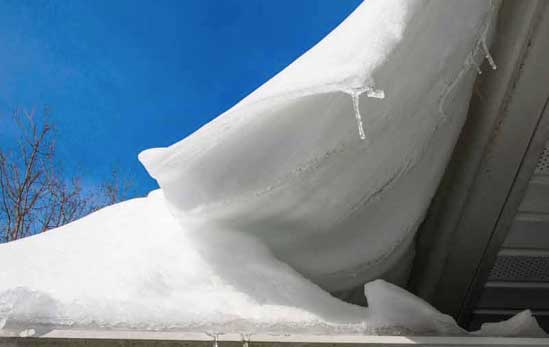
Icicles hanging off your gutters look picturesque, but they’re actually warning you about ice dams. An ice dam forms when heat escaping from your house melts snow on the upper roof, that water runs down to the colder roof edge, refreezes, and creates a barrier of ice. More meltwater backs up behind this ice dam, and with nowhere to go, it works its way under shingles and into your home.
You can spot ice dams from the ground: look for thick ridges of ice along roof edges, usually at the gutter line. Sometimes you’ll see icicles combined with what looks like a frozen waterfall along the edge. Inside, you might notice cold spots on walls near the roof line or—if it’s bad—dripping water or stains. Ice dams are especially common in areas like Tahoe and Truckee where snow loads are heavy, but Reno gets them too. If you see signs of ice damming, you need to address both the immediate dam (carefully—don’t get on an icy roof) and the underlying cause, which is usually heat loss and poor ventilation.
Warning Sign #4: Sagging or Discolored Sections of Ceiling
Sometimes water damage doesn’t create an obvious stain—it creates a sag or bulge in your ceiling. This happens when water saturates drywall or plaster to the point where gravity starts winning. If you notice a section of ceiling that looks like it’s drooping, or if it’s discolored but not in a typical stain pattern (maybe it just looks “dirty” or darker than surrounding areas), that’s often water damage.
Touch it gently with your finger (don’t poke hard—seriously damaged ceilings can collapse). If it feels soft, spongy, or damp, you’ve got active water intrusion. This is an urgent situation. Turn off electricity to that room if there are light fixtures or outlets in the affected area, put a bucket underneath to catch drips, and call a roofing professional immediately. A sagging ceiling means significant water has accumulated, and the structural integrity of your ceiling is compromised.
Warning Sign #5: Musty Odors or Visible Mold
Your nose knows. If you walk into a room—especially an upper floor room, attic, or closet near the roof line—and smell something musty or earthy, that’s mold. Mold needs moisture to grow, so a moldy smell in winter means water is getting in somewhere even if you can’t see it yet. Check closets, the corners of rooms, areas behind furniture pushed against exterior walls, and definitely your attic.
Visible mold is the next stage—black, green, or brown spots or fuzzy growth on wood, drywall, or insulation. Some molds are just gross; others are legitimately hazardous to your health. Either way, mold means prolonged moisture exposure, which means you have a leak that’s been active for a while. Don’t try to clean it and forget about it. You have to fix the moisture source or the mold will return, and the underlying rot will continue destroying your home’s structure. This is where Mills Roofing’s three decades of experience in Reno makes a difference—we don’t just patch the visible problem, we find and fix the root cause.
What to Do When You Spot Warning Signs
First, don’t panic, but don’t delay either. Document what you’re seeing with photos. If there’s active dripping, contain it with buckets or tarps to prevent further interior damage. Check your attic if you can do so safely—look for the entry point above any interior damage. Then call a professional roofing contractor who knows Northern Nevada’s specific challenges.
At Mills Roofing, we’ve trained our crews to think like detectives. Winter leaks are rarely straightforward—water travels along rafters, drips from unexpected places, and disguises its entry point. Our team uses systematic inspection methods developed over 45-plus years and thousands of repairs to find exactly where water is getting in and what damage it’s caused. We don’t guess; we know.
Prevention Is Cheaper Than Repair
Here’s the truth: most winter roof leaks are preventable. They start with minor issues—a worn shingle, inadequate flashing, poor attic ventilation, clogged gutters—that go unaddressed until winter weather exploits them. A fall roof inspection catches these problems when they’re cheap and easy to fix. Waiting until you see water stains means you’re paying for emergency repairs plus interior restoration plus potential mold remediation. That’s a lot more expensive than preventive maintenance.
We tell every Reno-area homeowner the same thing: your roof is protecting everything you own and everyone you love. It deserves attention before problems develop, not after. If you’re seeing any of these five warning signs—or if you just want peace of mind before winter really hits—let’s get someone out there to take a look.
Concerned about winter roof leaks? Mills Roofing provides thorough leak detection and repair services throughout Reno, Sparks, and Northern Nevada. Our experienced crews will find the source, explain what’s happening, and fix it right the first time. Call today or visit our website to schedule your inspection. Don’t wait until that small stain becomes a big problem.