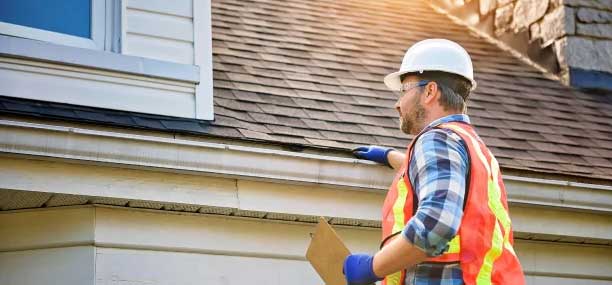
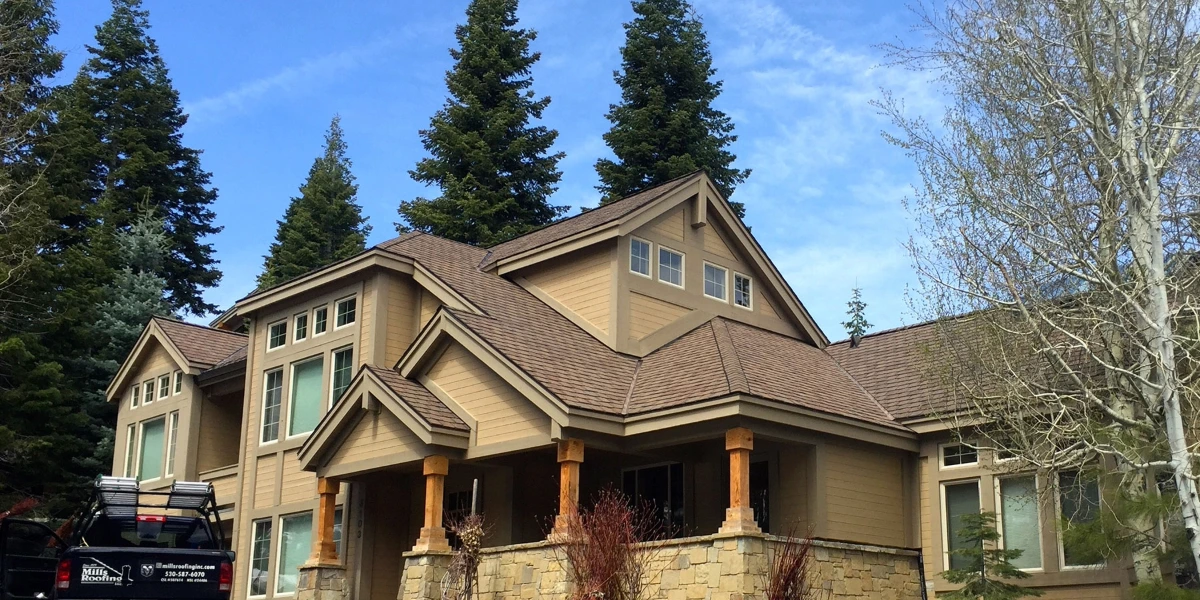
If your home made it through another Sierra Nevada winter, you know what comes with it: heavy snow loads, repeated freeze-thaw cycles, and ice that can take a toll on even a well-maintained roof. At Mills Roofing, we’ve been inspecting and repairing roofs in the Reno–Tahoe region since 1987, and spring is one of the most important times of year to take a close look at what’s above your head. The benefits of regular roof inspections go far beyond spotting a loose shingle. A thorough spring roof inspection can detect structural stress, hidden damage from ice-dams, and material wear before they become costly problems. This checklist will tell you exactly what to look for.
Did the Snow Load Cause Structural Damage?
The Sierra Nevada doesn’t mess around. When feet of snow sit on a roof for weeks (or months) the weight adds up in ways you can’t always see from the outside. A structural problem won’t always announce itself with a visible roof defect.
Head indoors first. Check for new cracks in your drywall, interior doors that suddenly stick or won’t latch, or any bowing in your ceiling that wasn’t there before fall. These are signs of stress that appeared over winter. From there, take a look in the attic. Local roofing experts recommend inspecting your rafters for fresh splintering or compression marks. These are tell-tale signs that your structure absorbed more load than it should have. If anything looks off, stop here and call a professional before climbing on the roof yourself.
Check Your Heat Cables After the Big Melt
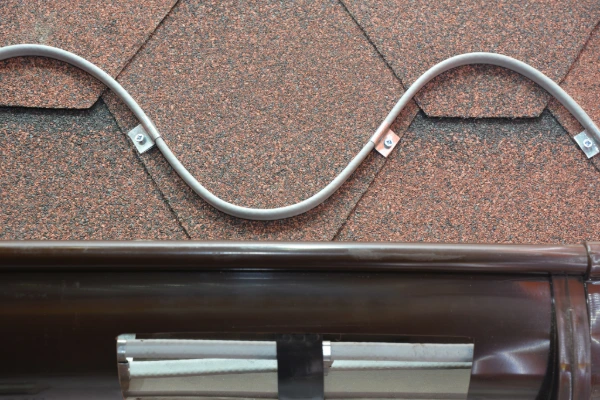
To prevent ice dams from developing along the eaves, many Tahoe-area homes rely on heat tape or de-icing cables. These systems do their job well until a roof avalanche takes them with it.
Look at the zig-zag patterns of cables along your eaves. If a large slab of sliding snow came off your roof this winter (especially common on metal roofs), it may have snagged those cables and pulled the clips right out of the shingles. Look for frayed wires or sections that have come loose. Never test cables by touch. Instead, check that the system is powered on and look for signs of warmth along the cable path, or check the indicator lights if your system has them. Exposed screw holes from pulled clips are also entry points for water and need to be addressed without delay.
Granule Loss: What’s Normal and What’s Not
If you’ve noticed a sandy pile of grit collecting at the bottom of your downspouts this spring, you’re not imagining things. Granule loss is a real concern in the Tahoe–Truckee area, and our freeze-thaw climate makes it worse than in most regions.
Ice that sits on asphalt shingles for extended periods puts repeated stress on the surface as temperatures rise and fall. Over time, that movement can loosen and displace the protective granules. Some granule loss is expected and normal. But if you see dark, bald patches on your shingles, spots where the UV-protective layer has been worn away, those areas are now exposed to high-altitude sun and won’t hold up much longer. A clump of granules in your gutters after a heavy ice dam season often indicates that the shingle surface took more wear than it should have.
The Pine Needle Dam: A Tahoe-Specific Threat
Here’s something you won’t find in a generic roof inspection checklist: pine needle dams. If your home is surrounded by trees, and in Tahoe, most are, your gutters just went through another season of getting stuffed.
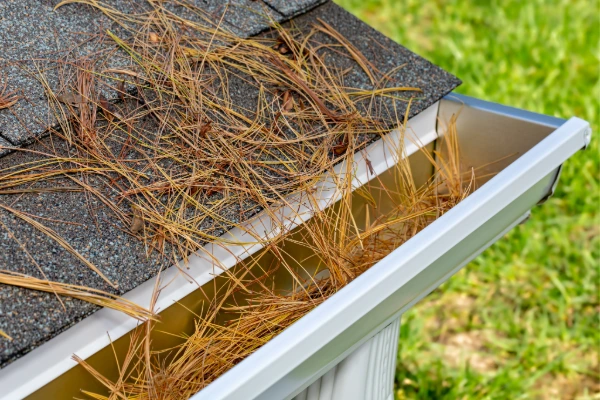
Even if you cleaned your gutters in the fall, winter winds and the weight of snow pressing through branches will push fresh needles and tree debris right back in. Clogged gutters in spring cause meltwater to back up under the first row of shingles during the “Big Melt,” which leads to rot in your fascia boards, the wood trim that runs behind the gutter line. Yes, you need to clean your gutters again. It’s one of the simplest and most cost-effective maintenance steps a Tahoe homeowner can do.
Have a Metal Roof? You Still Need This Checklist.
Metal roofs are excellent in the Sierra Nevada. They shed snow efficiently and hold up well against UV and moisture. But “low maintenance” doesn’t mean “no maintenance,” and spring is the right time to verify everything is still intact.
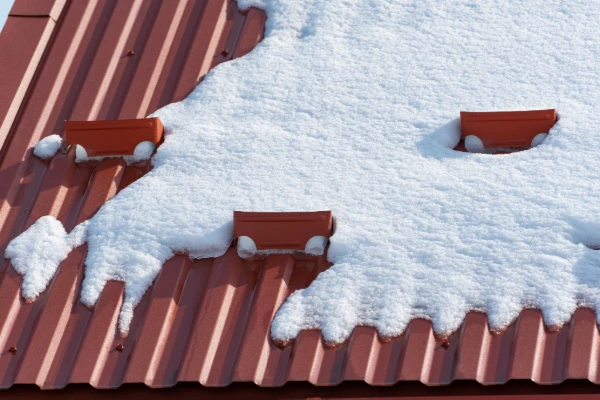
Two areas deserve special attention: snow guards and vent boots. Snow guards are metal cleats installed to prevent large slabs of snow from sliding off the roof at once. Moving ice exerts a lot of force, and a sheared snow guard leaves an open screw hole, which is an open invitation to water intrusion. Vent boots, the rubber seals around pipes and vents, also take a beating from the freeze-thaw cycle. A cracked or lifted boot is one of the leading causes of attic leaks.
Quick Sierra Nevada Spring Roof Inspection Checklist
Use this as your starting-point walkthrough before you call in a pro:
Flashing — Inspect around the chimney base. Heavy Sierra snow sliding off the roof can peel metal flashing away as it moves. Look for gaps, lifting, or separation at the edges.
Skylights — Check for condensation between the panes. Seal failure in double-pane skylights is often age-related, but harsh temperature swings can accelerate it. If you notice fogging now, it’s likely developed over winter and may become more noticeable as temperatures rise.
Attic — Look for tide marks or staining on your insulation. Even if the attic feels dry now, watermarks prove that an ice dam leaked at some point this winter. Those areas need attention.
Trees — Walk your roofline and identify any branches that have sagged under snow weight and are now in contact with, or rubbing against, your roof. Constant abrasion damages shingles and gives moss and algae a foothold.
Gutters — Clear all pine needles, debris, and any remaining ice melt residue. Confirm that gutters are still properly pitched toward the downspout and haven’t been pulled away from the fascia by ice weight.
Frequently Asked Questions
Twice a year is a solid baseline. Once in spring, after the snow season, and once in fall before it begins. Homes in heavily wooded areas or those that experience significant ice damming may benefit from more frequent checkups.
A ground-level visual and an attic check are both things homeowners can do. But a true roof inspection, one that assesses flashing, vent boots, structural integrity, and material condition up close, requires a trained professional with the right equipment and experience to do it safely and accurately.
Common signs include tide marks or water staining on attic insulation, peeling paint near exterior soffits, water stains on interior ceilings near exterior walls, and granule deposits in gutters that are heavier than usual.
Most residential inspections take between 1 and 2 hours, depending on roof size, complexity, and the amount of attic access available. A thorough inspection shouldn’t feel rushed.
Yes. Metal roofs have their own set of inspection points, including snow guard integrity, screw seals, vent boots, and panel seams, and our team is experienced with both metal and asphalt shingle systems throughout the region.
Why a Professional Roof Inspection Matters
A personal walkthrough is a great starting point, but it has real limits. You can spot obvious granule loss from the ground and check heat cables from the eaves, but you can’t assess flashing integrity, vent boot condition, or subtle structural movement the way a trained eye can.
Mills Roofing has been the Reno–Tahoe region’s trusted roofing expert for nearly four decades. Our detailed inspections are built around the specific demands of this climate, not a generic checklist copied from somewhere else. Whether your roof needs minor repairs, a Roof Maxx treatment to extend its life, or a full roof replacement with Owens Corning or CertainTeed materials, we’ll give you a straight, honest assessment and the options to back it up. Financing is available.
Ready to schedule your spring roof inspection? Contact Mills Roofing today.