
A Reno-Tahoe Homeowner’s Guide to Reading Winter Warning Signs Before They Become Roof Damage
Most winter roof problems show early signs. Knowing how to read them keeps small issues small.
Winter in Reno, Tahoe, Truckee, and Carson Valley asks a lot of your roof. Most seasons, a well-maintained roof handles it without complaint. When something starts to change, though, your roof usually signals it first: a ridge of ice along the eaves, a row of icicles that grows longer each day, a door upstairs that suddenly sticks.
Knowing what those signals mean is the foundation of protecting your home through the season. Whether you live in your home year-round or check on a mountain property a few weekends a season, knowing the difference between normal winter wear and something that deserves a detailed inspection is key. It enables you to protect your investment on your own schedule, rather than discovering a problem once it reaches your ceilings.
Why Sierra Winters Test Every Roof
Two conditions put steady stress on roofs in our region. The first is the freeze-thaw cycle. High-elevation sun can melt snow on a roof by early afternoon, and that water refreezes as temperatures drop overnight. Over weeks, that repetition works ice into every edge, seam, and gutter.
The second is snow weight. Fresh powder is relatively light, but the wet, dense snow common in the Sierras can weigh several times as much as the same depth of powder. A rain-on-snow event can change the load on your roof in a single afternoon.
Ice Dams: What They Are and Why They Form
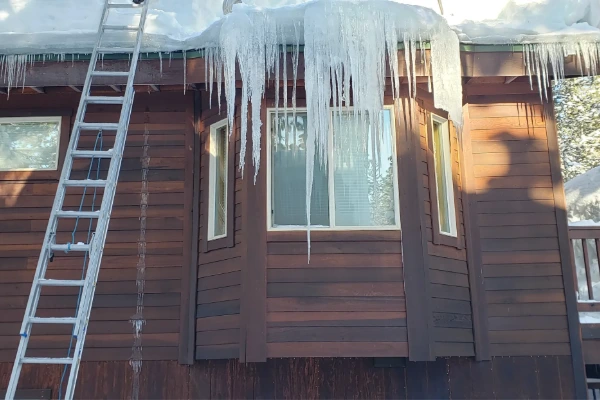
An ice dam on your home forms due to heat escaping from your attic, warming your roof decking and melting the snow above it. That melted snow runs down to the colder eaves, where it refreezes into a ridge, or line, of ice. As the ridge grows thicker, water pools behind it and can back up underneath your shingles and into your home.
Signs an ice dam may be forming:
- A thick band of ice building along the eaves or inside the gutters
- Water stains or discoloration on ceilings near exterior walls
- Damp or compressed insulation in the attic
- Peeling paint or moisture marks on soffits and exterior walls
A thin skim of ice on the eave after a cold night is common. A ridge that thickens day after day is your roof asking for attention.
How Can You Prevent Ice Dams Before They Start?
Knowing how to prevent ice dams starts with one fact: most trace back to heat loss, which means the most effective prevention happens inside the attic rather than on the roof.
- Insulation: Adequate attic insulation keeps living-space heat from reaching the roof deck, so snow melts evenly instead of feeding a ridge of ice at the eaves.
- Ventilation: Balanced intake and exhaust ventilation keeps the roof deck close to outdoor temperature.
- Air sealing: Gaps around recessed lights, attic hatches, and plumbing vents let warm air escape upward and are worth sealing before the season starts.
- Gutters: Clear gutters give meltwater somewhere to go. Clogged gutters give ice a head start.
- A roof rake: After a heavy storm, pulling the first few feet of snow off the eaves from the ground reduces the snow available to melt and refreeze.
Homes at higher elevations, including roofs in the Donner area, often need closer attention to roof design and ventilation. For many homeowners, ice dam prevention works best as part of seasonal roof maintenance, handled through a routine roof maintenance plan where each season’s inspection builds a documented history of your roof. Some homeowners also add Roof Maxx treatments to their winter routine to keep aging shingles flexible through the cold months.
Ice Dam Removal: Why the Hammer Stays in the Garage
When an ice dam has already formed, how it comes off matters as much as whether it comes off. Chipping at ice, spreading rock salt on shingles, or using any kind of open flame can damage shingles, flashing, and gutters faster than the ice dam itself. Professional ice dam removal uses controlled methods designed to clear the ice without harming the roof underneath, which is the approach behind our ice dam and snow solutions.
Icicles: Reading the Pattern
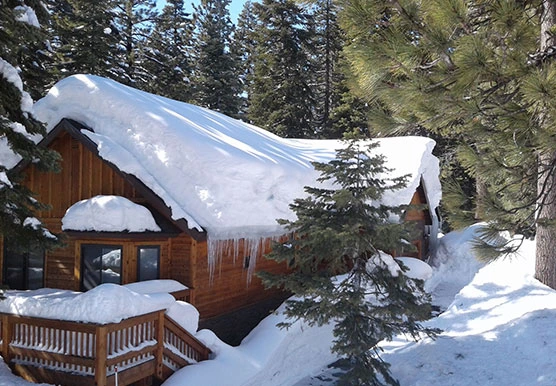
A few scattered icicles along the gutter line are a normal part of winter here. Their size, location, and pattern are what tell the story.
Icicles that warrant attention:
- A continuous curtain of icicles along the full length of an eave, which often points to heat loss and an ice dam forming above
- Icicles hanging from soffits, siding, or behind the gutter are signs that water may be getting where it shouldn’t
- Unusually thick icicles concentrated over one section of the home, which can indicate a localized ventilation or insulation issue
Large icicles are also a safety concern over entryways, decks, and walkways, so avoid those areas until the icicles can be safely removed.
Heavy Snow: When Weight Becomes the Concern
Roofs in snow country are designed with winter loads in mind, so accumulation alone isn’t a problem. The concern comes when depth, density, and drifting combine on an older roof or one with existing wear.
Signs your roof may be carrying too much:
- Interior doors or windows, particularly upstairs, that suddenly stick or won’t latch
- Visible sagging along the roofline or ceiling
- Cracking or popping sounds from the attic
- New cracks in drywall near the ceiling
- Deep drifts building in valleys, behind chimneys, or on lower roof sections below a taller roofline
A roof rake used from the ground is a reasonable option for light snow on a single-story home. Climbing onto a snow-covered roof is a different matter, since the risks of DIY snow removal increase significantly with height, pitch, and ice. Snow and ice can also show up indoors first, through winter roof leak warning signs like ceiling stains or drips around light fixtures.
Normal Winter Wear vs. Worth a Call
| What You’re Seeing | Usually Normal | Worth a Call |
| Ice at the eaves | Thin skim after a cold night | A ridge that grows day over day |
| Icicles | A few small ones along the gutter | A full curtain, or icicles from soffits or siding |
| Snow on the roof | Even coverage after a storm | Deep drifts, sagging, or sticking doors |
| Inside the home | No changes | Ceiling stains, damp insulation, new drywall cracks |
| Sounds | Occasional settling as snow shifts | Repeated cracking or popping from the attic |
When You Can’t Be There to Watch
Many homeowners in Tahoe, Truckee, and the surrounding mountain communities own a home they aren’t at every week. A storm can come and go, and an ice dam can form, without anyone there to notice.
Our snow monitoring membership was built for exactly that situation. Members have a roofing professional keeping watch over their property through the season. It’s the kind of ongoing relationship Mills Roofing aims to build with every homeowner: one that lasts as long as your roof does.
Seasonal Roof Maintenance: Staying Ahead of Next Winter
Most of the conditions that lead to ice dams take shape in the fall, long before the first storm. Clearing gutters, checking attic insulation, and inspecting flashing are the core of a winter-ready roof checklist, and each one reduces the chance of ice and snow stress once the season arrives. After a heavy storm, the priorities shift to assessing snowstorm damage and documenting anything changes to the roof.
Frequently Asked Questions
Not always. A few small icicles are normal. A continuous row of large icicles along an eave, or icicles forming from soffits or siding, often indicates heat loss and an ice dam building above.
Ice dam prevention starts in the attic. Adequate insulation, balanced ventilation, and sealed air leaks keep heat from melting snow unevenly, while clear gutters and a roof rake handle the rest from outside.
A pre-winter visit typically covers shingle and flashing condition, gutter drainage, attic insulation and ventilation, and any areas where ice has formed in past seasons. Each visit adds to a documented history of your roof, which makes changes easier to spot from one winter to the next.
Light snow can be pulled from the eaves with a roof rake from the ground. Chipping ice, using rock salt, or climbing onto an icy roof risks damaging shingles and gutters, as well as serious injury to you. Ice dam removal is best handled by a professional.
There’s no single number for every roof, since it depends on age, pitch, structure, and snow density. Sticking doors or windows, visible sagging, and cracking sounds from the attic are all reasons to schedule an inspection.
Sometimes, depending on your policy and whether the damage is considered sudden or maintenance-related. Homeowners insurance coverage for roof damage varies widely between policies, so reviewing yours before winter is a smart step.
Noticing ice at the eaves or snow building up faster than usual?
Request a detailed inspection on your schedule, and we’ll walk you through exactly what we find.